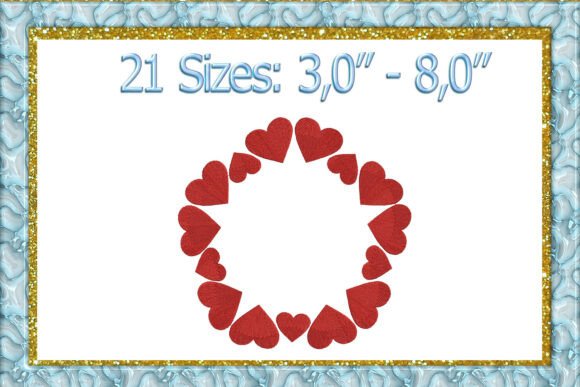
Heart Frame Monogram Embroidery Design
A Craft Fair Designer’s First Look: Bold, Romantic, and Booth-Ready
As someone who’s stitched over 300 craft fair booths—and curated embroidery for Etsy shops, boutique makers, and wholesale handmade lines—I opened Heart Frame Monogram Embroidery Design expecting a Valentine’s Day staple. What I found was sharper: a clean, confident shape that balances romance with structure. It reads as elegant, not cutesy; timeless, not trendy. The heart frame isn’t fussy or overly ornate—it’s a strong silhouette with room for personalization, making it ideal for customers who want meaning without clutter. That matters on a crowded craft fair table where first impressions happen in under three seconds.
Where This Design Shines on Real Handmade Products
This machine embroidery design thrives where contrast, clarity, and emotional resonance intersect. On a natural linen tote bag? Perfect—its 7.97” size anchors the front panel without overwhelming. On an apron? Ideal placement is centered just below the pocket—elegant but functional. For tea towel embroidery, it holds up beautifully on medium-weight cotton: the frame defines space, and the monogram area invites customization without shrinking into illegibility.
As an embroidered patch, it’s highly adaptable—especially when backed with heat-seal adhesive for easy application on denim jackets or market bags. On small fabric pouches (think 5” x 7”), use one of the smaller sizes (under 4”) to keep proportions balanced. Pillow covers? Go large—the full 7.97” version makes a luxurious focal point on a 16” square cover. And for caps? Stick to sizes under 3.5”: the curved surface compresses detail, and this design’s clean lines hold up better than script-heavy alternatives.
What Makes It Sell at Market Stalls and Online
It’s instantly legible. No decoding needed—customers see “heart + monogram + frame” and understand its purpose before you say a word. That’s gold for craft fair traffic flow. It photographs exceptionally well. Clean edges, consistent stitch density, and open negative space mean your Etsy listing or printable mockup looks crisp—even on mobile. It’s batch-friendly. With 21 sizes included, you can produce matching sets (tote + tea towel + pouch) using the same digital embroidery file, maintaining brand consistency across product lines.
Most importantly, it elevates perceived value. A plain cotton market bag becomes a giftable handmade product with this design—not just utility, but sentiment. Buyers connect emotionally, then justify the price point based on craftsmanship, not just fabric.
Careful-Use Notes Every Embroiderer Should Know
- Dense stitch areas: The inner frame edge may run higher stitch density—test on your target fabric with recommended stabilizer to avoid puckering, especially on lightweight knits or textured terry cloth.
- Small lettering limits: While the monogram space is generous, avoid cramming more than 2–3 characters at smaller sizes (<2.5”). Legibility drops fast below 1.75”.
- Dark fabric & thread contrast: This design relies on clear definition between frame and background. On charcoal or navy fabrics, use bright white or metallic thread—not ecru or light gray—to preserve impact.
- Curved surfaces: Caps and curved pouch seams require re-hooping precision. Use tear-away stabilizer and reduce top tension slightly to prevent thread breakage in tight curves.
- Fabrics with texture: Waffle-weave tea towels or slubbed linen demand extra stabilizer layers. Skip cut-away unless testing confirms it doesn’t stiffen the drape too much.
How It Strengthens Your Booth, Brand, and Buyer Engagement
In person, Heart Frame Monogram Embroidery Design draws eyes without shouting. Its symmetry creates visual calm amid busy displays—critical when neighboring booths feature loud prints or maximalist stitching. Paired with neutral-toned products (cream totes, oatmeal aprons), it reads as premium. Paired with blush or terracotta accents, it feels seasonally warm without locking you into February-only sales.
For Etsy sellers and digital embroidery file creators, it’s a versatile asset: easily paired with coordinating fonts or floral motifs in listings, scalable for print-on-demand mockups, and recognizable enough to build repeat recognition across collections. As a Shapes category embroidery design, it’s inherently flexible—no seasonal expiration date like overt holiday motifs.
Pro Designer Checklist Before You Stitch
- Test the design on scrap fabric matching your production material—especially for texture, stretch, and weight.
- Verify thread colors against your fabric swatches in natural light—not just screen light.
- Review spacing between monogram letters and frame edges: tight gaps may vanish at smaller sizes.
- Confirm hoop size compatibility—some versions may require a 8” x 8” hoop or larger, depending on selected size.
- Inspect stitch density in the frame outline—dense fills need stronger stabilizer support.
- Use appropriate stabilizer: medium-weight cut-away for stable wovens, tear-away for towels, fusible for patches.
- Create at least one real finished product mockup—not just digital—before committing to a full batch.
- Compare how the design reads across multiple fabric colors—light vs. dark, solid vs. subtle heather.
- Confirm commercial licensing terms are included—this is essential for selling finished products, not just digital files.
Final Thought: A Quiet Workhorse for Creative Entrepreneurs
Heart Frame Monogram Embroidery Design isn’t flashy—but it’s reliable, emotionally resonant, and commercially smart. It fits seamlessly into a handmade shop’s core collection, supports scalable production for small-batch sellers, and delivers consistent appeal across tote bags, aprons, tea towels, and more. For craft fair sellers building a cohesive booth story, it’s the kind of embroidery file that earns compliments, drives repeat buyers, and quietly strengthens your reputation as a maker who understands both beauty and function. Just remember: test, adjust, and trust the frame—it’s built to hold meaning, not just monograms.